Pipeline Inspection, Non-Destructive Testing (NDT) & Integrity Assessment
Ensuring the structural integrity and operational safety of pipelines requires rigorous, high-precision non-destructive evaluation and engineering assessment. Lucama Engineering Services delivers advanced pipeline inspection and integrity checks that identify corrosion, mechanical damage, cracking, and weld anomalies before they evolve into costly failures.
Our ASNT and PCN Level II and Level III certified technicians utilize state-of-the-art non-destructive testing (NDT) methods including Phased Array Ultrasonic Testing (PAUT), Time of Flight Diffraction (TOFD), Guided Wave Ultrasonic Testing (GWUT), and Magnetic Flux Leakage (MFL). We also provide expert In-Line Inspection (ILI / smart pigging) data verification and direct assessment.
Inspection Scope & Non-Destructive Testing Capabilities
We provide comprehensive inspection services for cross-country pipelines, facility piping, tanks, and structural supports:
Phased Array Ultrasonic Testing (PAUT) & TOFD weld inspection
Long-Range Guided Wave Ultrasonic Testing (LRUT/GWUT) for cased crossings
In-Line Inspection (ILI / smart pig) correlation & dig verification
Precision ultrasonic thickness (UT) scanning & corrosion mapping
Magnetic Particle Inspection (MPI) & Dye Penetrant Inspection (DPI)
Fitness-For-Service (FFS) assessments to API 579 / ASME FFS-1
External Corrosion Direct Assessment (ECDA) & ICDA surveys
Positive Material Identification (PMI) & field hardness testing
Predictive Integrity & Defect Characterization
Our data-driven inspection methodologies provide pipeline asset managers with clear, quantitative flaw characterization and remaining life calculations.
Advanced Ultrasonic Scanning (PAUT/TOFD)
ILI Smart Pig Dig Verification
Fitness-For-Service (API 579)
Replacing conventional radiography with digital PAUT and TOFD provides rapid, radiation-free volumetric inspection with precise depth sizing of planar flaws, cracks, and lack of fusion.
- Instant digital imaging and computerized record archiving
- No radiation exclusion zones, enabling concurrent construction
- Automated encoders ensuring accurate defect mapping and positional accuracy
When in-line smart pigs flag anomalies, our field inspection teams conduct direct excavation, NDT validation, and 3D laser scanning to calibrate tool run data and verify true anomaly geometry.
- Direct measurement of external/internal metal loss
- 3D laser profile scanning for dent and gouge assessment
- Immediate dig-site reporting to confirm or de-escalate repair urgency
Our integrity engineers perform Level 1, 2, and 3 Fitness-For-Service calculations to determine safe operating pressures, remaining strength (RSTRENG), and remediation timelines.
- RSTRENG and modified B31G pressure calculations
- Crack assessment using fracture mechanics modeling
- Remaining life projections for strategic maintenance scheduling
Integrity Advantages with Lucama
ASNT Level III oversight ensuring highest inspection accuracy
Rapid digital reporting with interactive 3D flaw modeling
Proven reduction in unnecessary pipeline dig and cut-out costs
Strict compliance with API 1163, ASNT SNT-TC-1A, and ISO 9712
Comprehensive inspection data integration with operator GIS databases
Advanced equipment capable of inspecting insulated or buried lines
Inspection & Integrity Verification Process
Our systematic inspection protocol ensures flawless defect detection, metallurgical evaluation, and actionable asset management recommendations:
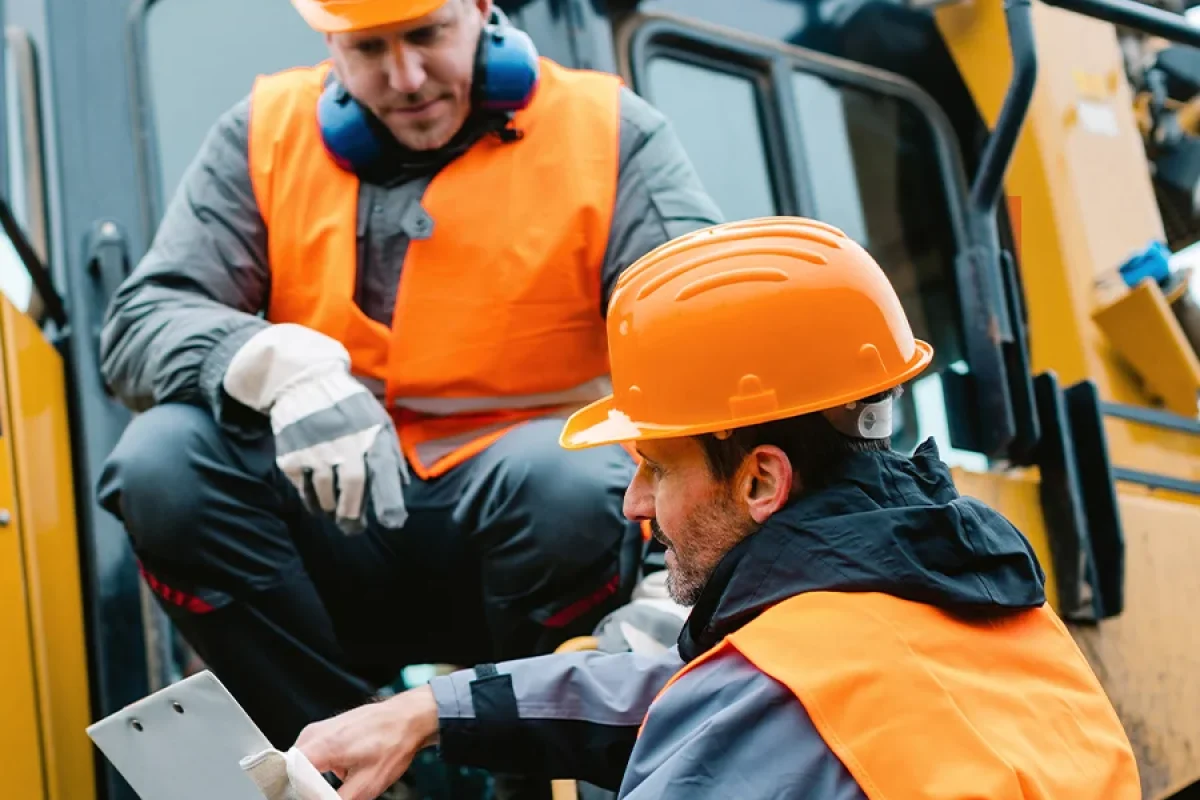
Inspection technicians operate under stringent safety protocols, certified calibration routines, and continuous quality checks. We ensure zero disruption to ongoing pipeline operations during all non-destructive testing tasks.
Frequently Asked Questions
What is the advantage of PAUT over conventional radiography (RT)?
PAUT offers real-time digital imaging, precise defect depth and height sizing, eliminates radiation safety hazards and exclusion zones, and enables concurrent construction work on site.
Can you inspect pipelines beneath insulation or road casings?
Yes. We deploy Guided Wave Ultrasonic Testing (GWUT), which propagates acoustic waves tens of meters along the pipe wall from a single access point without stripping all insulation or excavating entire road casings.
What is an API 579 Fitness-For-Service (FFS) assessment?
API 579 is an engineering evaluation methodology used to determine if a pipeline with flaws, corrosion, or denting can safely continue operating under current or de-rated pressures.
How quickly are inspection reports delivered?
Preliminary on-site inspection findings are provided immediately upon completion of scanning, followed by full engineering evaluation reports with 3D color maps within 24 to 48 hours.
TECHNICAL SPECIFICATIONS
Download our corporate capability statement or pipeline engineering technical specifications.

Need Pipeline Support?
1200 Industrial Parkway, Suite 400
Houston, TX 77001
Houston, TX 77001
info@lucamaengrservices.com
24/7 Emergency Dispatch